
The Midnight Move: How the US Venezuela Attack Reshaped South America in Hours
 The world woke up on January 3, 2026, to a drastically different geopolitical map. In a lightning-fast operation that caught the international community off guard, U.S. forces conducted a massive military operation that resulted in the capture of Venezuelan leader Nicolas Maduro and his wife, Cilia Flores. While the White House frames this as a long-awaited new dawn, the ground reality in Caracas is one of fire, confusion, and a frantic search for answers. This sudden us Venezuela attack has not only removed a head of state but has also pushed the entire region to the edge of a potential humanitarian and military disaster.
The Lightning Strike: Trump’s Large-Scale Move
US Venezuela Attack: The operation began in the early hours of Saturday morning. According to posts on Truth Social, President Donald Trump confirmed that the United States military, working in a rare partnership with U.S. Law Enforcement, successfully executed a large-scale strike. The goal was clear: extraction. By the time the news hit the wires, Maduro and Flores had already been flown out of Venezuela to an undisclosed location.
In Washington, the sentiment was one of immediate victory. Deputy Secretary of State Christopher Landau took to social media to announce that a new dawn had arrived for the country, stating that the tyrant is gone and would finally be forced to face justice. However, the specific legal charges Maduro will face were not detailed in the immediate aftermath, though the administration’s rhetoric suggests a focus on his past leadership and alleged crimes.
Confusion in Caracas: A Government Without a Head
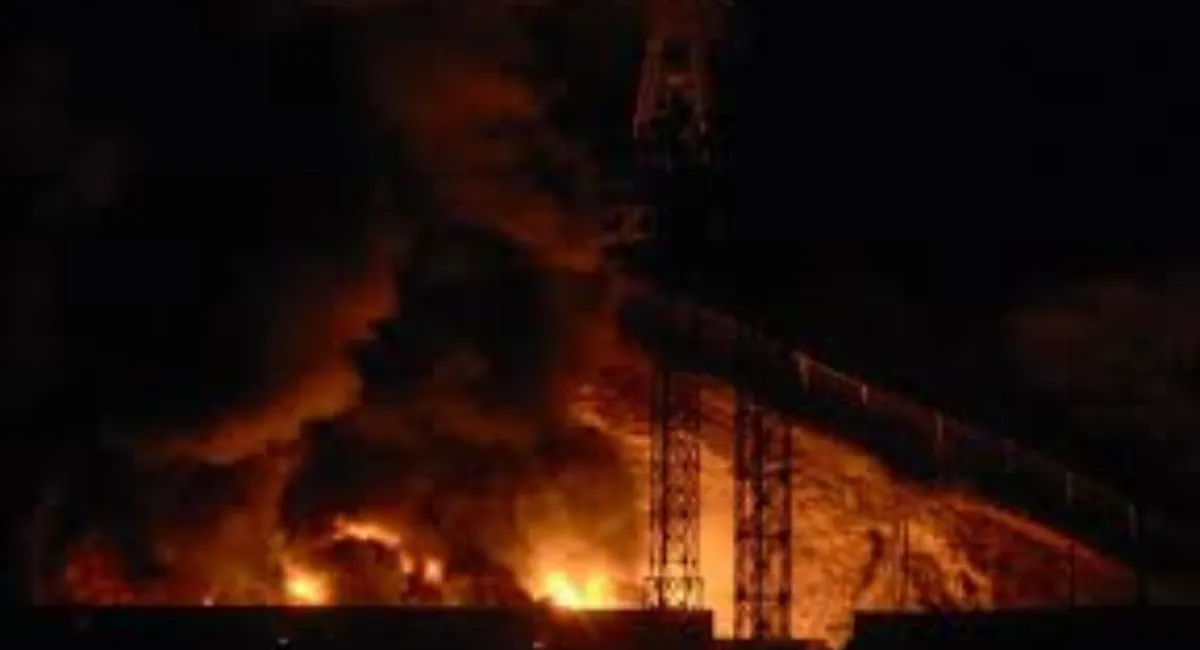 As the dust settled from the initial us Venezuela attack, the remaining leadership in Caracas struggled to maintain control. Vice President Delcy Rodriguez appeared on television via telephone, sounding a note of deep alarm. She admitted to the public that the government did not know where Maduro or Flores were following the wave of strikes that hit Caracas and several other major cities.
In a move that highlights the total breakdown of communication between the two nations, Rodriguez has officially demanded that the U.S. provide proof of life for the captured President. The uncertainty has left the country in a state of paralysis, even as the military begins to mobilize for what looks like a prolonged struggle.
Allegations of Residential Bombings and Civilian Targets
The military cost of the us Venezuela attack is already coming under intense scrutiny. While the U.S. focuses on the capture of the high-profile leader, Venezuelan officials are pointing to the wreckage left behind in residential neighborhoods. Defense Minister Vladimir Padrino Lopez released a video statement accusing the invading forces of desecrating the country’s soil.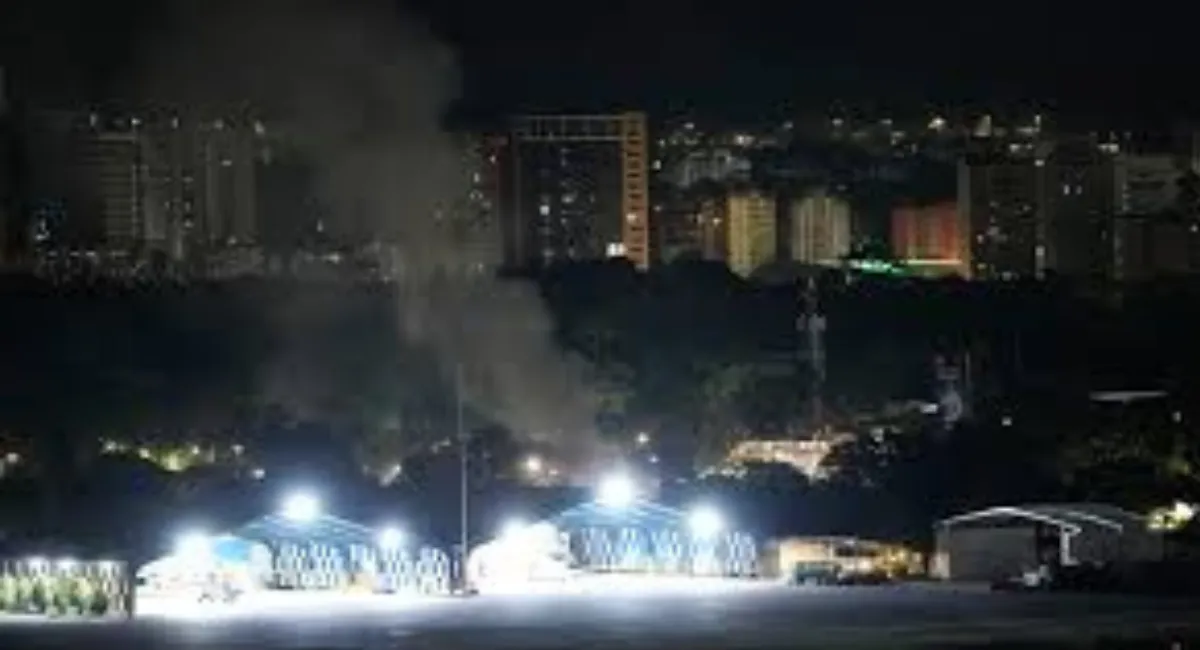
Padrino Lopez alleged that the strikes were far from surgical. He claimed that U.S. combat helicopters used missiles and rockets to hit residential areas filled with civilians. At this hour, officials in Venezuela are reportedly compiling lists of the dead and injured from these early morning strikes, though an official casualty count has yet to be finalized. These reports of urban strikes have fueled a narrative of aggression that is quickly spreading throughout Latin America.
The Military Response: “Massive Deployment” and Comprehensive Defense
US Venezuela Attack: Venezuela is not backing down. Despite losing its top leader, the military infrastructure is moving into a high-intensity defensive posture. Defense Minister Padrino Lopez announced that the nation would launch a massive deployment of its total military power to resist any foreign presence.
The mobilization is extensive and includes:
Land and Air Forces: Tasked with securing internal borders and defending against further aerial incursions.
Naval and Riverine Capabilities: Moving to protect the coast and the country’s intricate river systems.
Missile Capabilities: Prepared for what the ministry calls a comprehensive defense of the nation’s sovereignty.
The message from the military is clear: they view the us Venezuela attack as an illegal invasion and have vowed to resist any foreign troops currently on or entering their land.
Regional Outcry: Petro and the Colombian Border
The shockwaves from the us Venezuela attack crossed the border into Colombia almost immediately. President Gustavo Petro did not mince words, labeling the U.S. action an assault on the sovereignty of Latin America. In response to the strikes and the capture of Maduro, Petro ordered a significant military deployment to the Venezuelan border.
Petro’s concerns are rooted in the long-term stability of the region. He warned that this military intervention would almost certainly trigger a humanitarian crisis, as the fallout from the strikes and the loss of government control could lead to mass displacement. For Colombia, a destabilized Venezuela means a potential wave of refugees and a heightened risk of cross-border conflict.
International Fallout: South Korea and the Oil Tanker Context
US Venezuela Attack: The reach of this crisis is global. On Saturday, South Korean President Lee Jae Myung issued an urgent order for the protection of South Korean citizens currently in Venezuela. He further instructed officials to prepare for a full withdrawal of their nationals if the violence from the us Venezuela attack continues to spread.
This intervention did not happen in a vacuum. Tensions had been boiling over for months, specifically after the U.S. seized a Venezuelan oil tanker. That seizure served as a precursor to the direct military action taken this weekend, showing a clear shift in U.S. policy toward the use of physical force to achieve its goals in the region.
A “New Dawn” or a Growing Storm?
As of the evening of January 3, the situation remains extremely fluid. The United States maintains that the us Venezuela attack was a necessary step toward justice and the liberation of a nation. However, with the Venezuelan military mobilizing its missile and naval capabilities and the government demanding proof that their leader is even alive, the new dawn feels more like the start of a long, dark night.
The international community is now left to watch how this plays out. With civilian areas caught in the crossfire and neighboring countries like Colombia bracing for a humanitarian disaster, the removal of one leader has opened a door to a much larger and more dangerous conflict. Whether the capture of Maduro brings stability or simply more bloodshed is the question that currently hangs over the entire continent.
Recent Posts:
Tag and Keyword Summary: This report covers the us Venezuela attack on January 3, 2026. Key figures involved include President Donald Trump, Nicolas Maduro, Cilia Flores, Delcy Rodriguez, Vladimir Padrino Lopez, and Gustavo Petro. The article addresses the capture of Maduro, the strikes on Caracas, and the subsequent military mobilization.
